
In modern manufacturing, surface preparation is no longer optional—it is a critical determinant of product quality, durability, and compliance. We rely on shot blasting machines as a core industrial solution to clean, strengthen, and prepare metal and non-metal surfaces at scale.
This guide delivers a comprehensive, industry-focused explanation of what a shot blasting machine is, how it functions, and why it has become indispensable across manufacturing sectors.
Understanding a Shot Blasting Machine
A shot blasting machine is an industrial system designed to clean, descale, deburr, and profile surfaces by propelling abrasive media—such as steel shots or grits—at high velocity onto a workpiece. Unlike manual or chemical cleaning methods, shot blasting ensures uniform surface treatment, repeatable quality, and high productivity.
We deploy shot blasting to remove rust, mill scale, paint residues, welding slag, and surface contaminants, while simultaneously enhancing surface roughness for improved coating adhesion. This makes the process vital in industries where precision, strength, and longevity are non-negotiable.
How a Shot Blasting Machine Works?
At its core, a shot blasting machine operates through a closed-loop mechanical process designed for efficiency and media recovery.
Abrasive Media Feeding: Steel shots, steel grit, or other abrasives are stored in a hopper.
High-Velocity Projection: Turbine blast wheels or air nozzles accelerate the abrasive media toward the workpiece.
Surface Impact: The kinetic energy dislodges contaminants and modifies surface texture.
Abrasive Recovery: Used media is collected, cleaned through separators, and reused.
Dust Extraction: Advanced filtration systems remove dust and fines, ensuring a clean and safe environment.
This automated cycle allows us to maintain consistent blasting intensity, minimize waste, and control operating costs.
Also Check - Shot Blasting Machine Manufacturers, Shot Blasting Machine Price in India, Shot Blasting Machine Manufacturers in India, Shot Blasting Machine Price
Key Components of a Shot Blasting Machine
A high-performance shot blasting system is engineered from multiple precision components:
Blast Wheels or Nozzles
Blast wheels are the heart of wheel-based machines, delivering high throughput and uniform blasting. Air nozzles, used in portable systems, offer flexibility for on-site applications.
Abrasive Handling System
Includes hoppers, elevators, and screw conveyors that ensure continuous abrasive circulation.
Separation Unit
Separates reusable abrasive from dust and debris, preserving media quality and blasting efficiency.
Dust Collector
Industrial-grade filters protect operators, comply with environmental standards, and maintain workplace safety.
Control Panel
Modern systems feature PLC-based automation, enabling precise control over blasting parameters.
Website -




Types of Shot Blasting Machines Used in Manufacturing
We select shot blasting machines based on production volume, component geometry, and automation requirements.
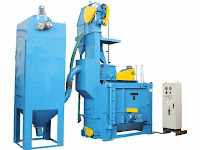
Tumble Type Shot Blasting Machine
Ideal for small to medium batch components such as fasteners, castings, and forgings. Parts tumble for complete surface coverage.
Hanger Type Shot Blasting Machine
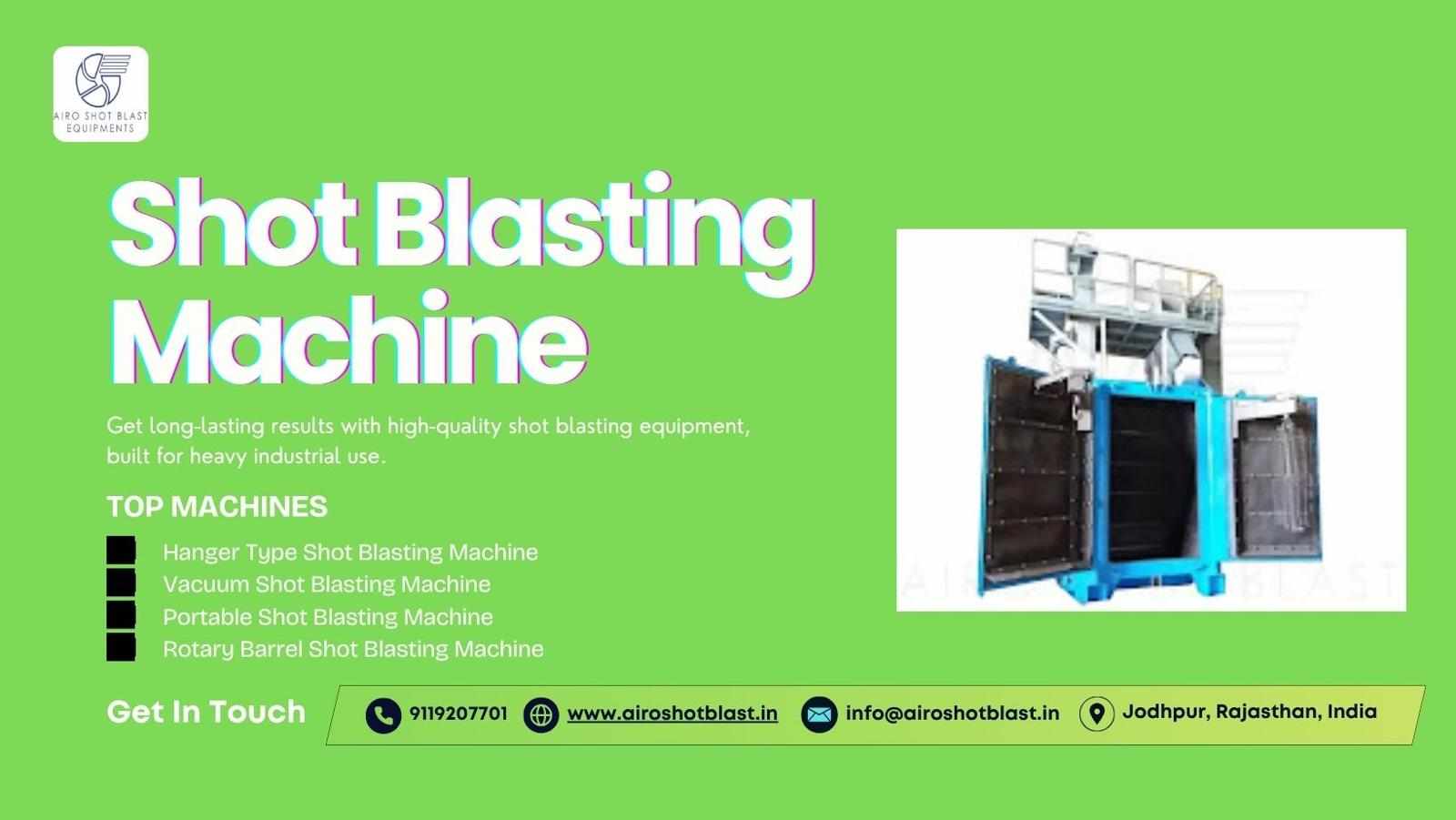
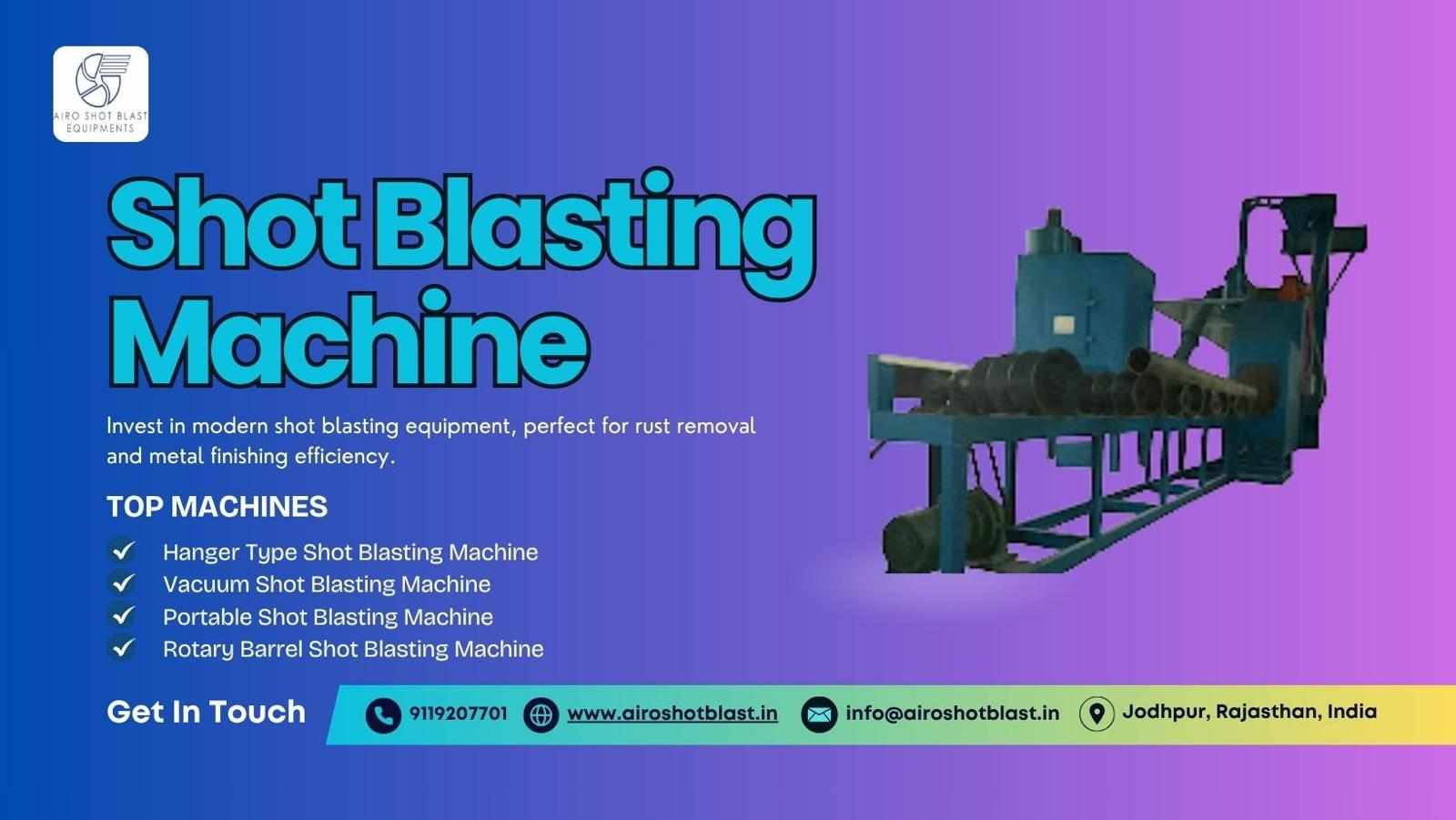
Designed for complex or delicate components that cannot tumble. Widely used in automotive and heavy fabrication units.
Roller Conveyor Shot Blasting Machine
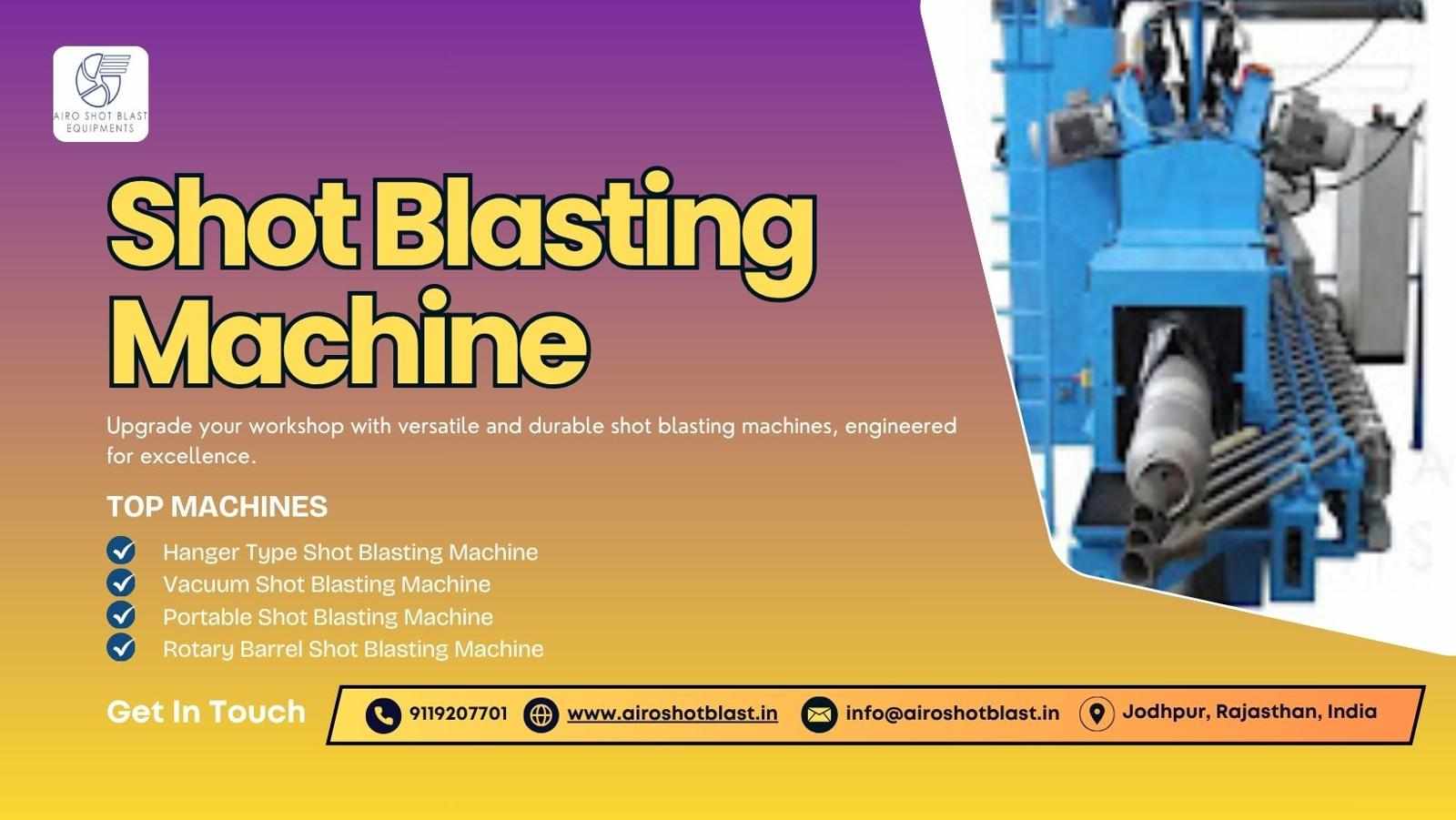
Used for plates, beams, and structural steel, delivering continuous inline processing for high-output plants.
Table Type Shot Blasting Machine
Best suited for flat or heavy workpieces, offering controlled blasting with rotational movement.
Portable Shot Blasting Machine
Common in on-site maintenance, shipyards, and infrastructure projects, enabling surface preparation without relocating components.
Cabinet Shot Blasting Machine
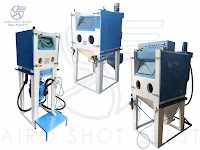
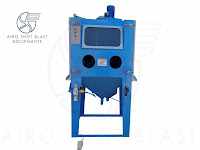
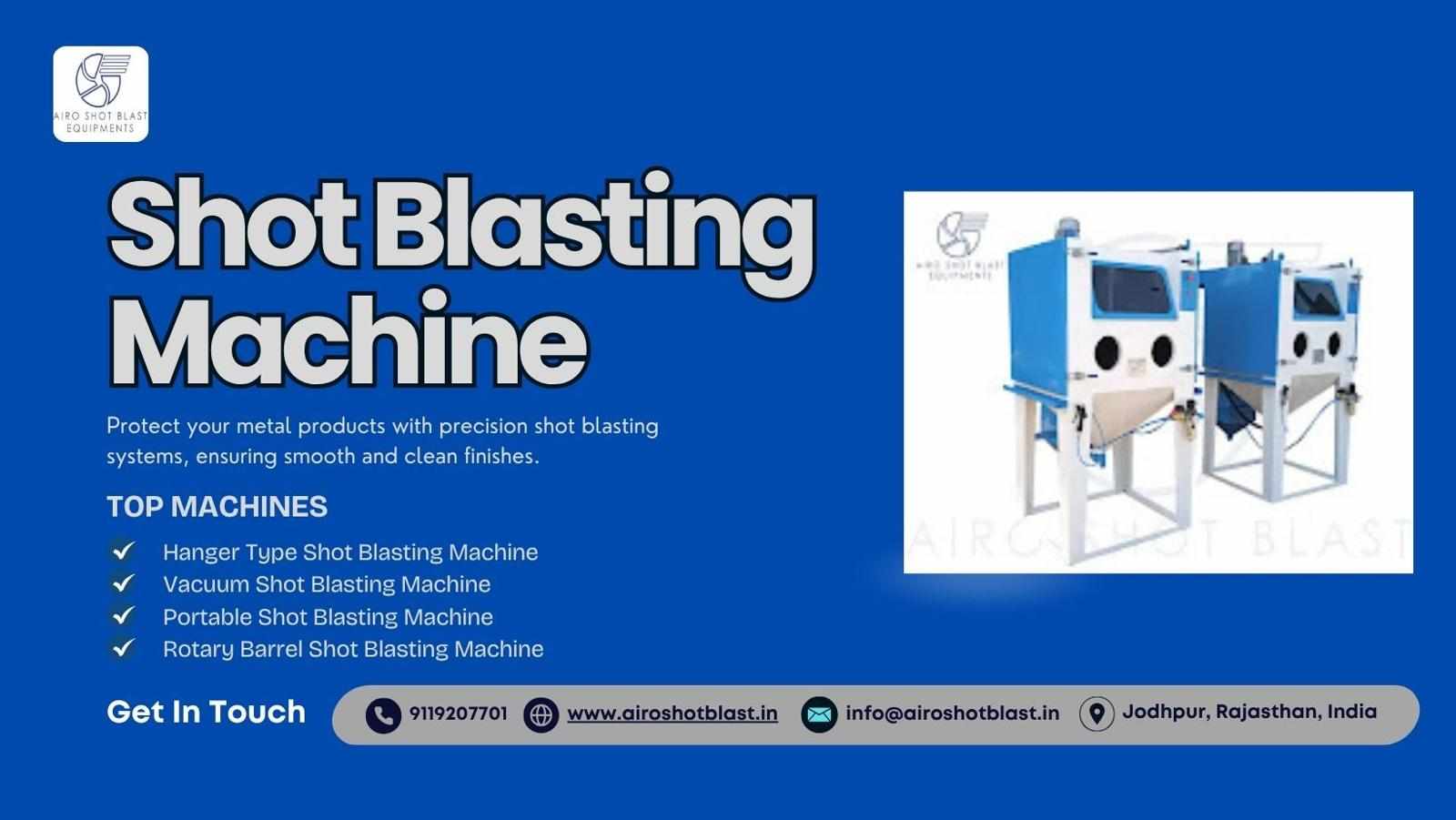
Compact, enclosed systems used for precision parts and laboratory-scale operations.
Abrasive Media Used in Shot Blasting
The effectiveness of shot blasting depends heavily on abrasive selection:
Steel Shot: Produces a smoother finish and induces compressive stress.
Steel Grit: Provides aggressive cleaning and surface profiling.
Cut Wire Shot: Ensures uniform size and consistent impact.
Non-Metallic Abrasives: Used for specialized applications where metal contamination must be avoided.
We optimize abrasive choice to match material hardness, surface finish requirements, and downstream coating processes.
Industrial Applications of Shot Blasting Machines
Shot blasting machines are integral to multiple manufacturing domains:
Automotive Manufacturing
Used for engine blocks, chassis components, gears, and suspension parts to improve fatigue resistance and coating adhesion.
Foundries and Forging Units
Removes sand, scale, and flash from castings and forgings, ensuring dimensional accuracy and surface integrity.
Steel Fabrication
Essential for beams, pipes, and plates before painting, galvanizing, or welding.
Aerospace and Defense
Applied for precision surface conditioning, ensuring compliance with strict performance standards.
Shipbuilding and Infrastructure
Used for corrosion removal and surface preparation in marine and heavy civil projects.
Benefits of Using Shot Blasting Machines in Manufacturing
Consistent Surface Quality
Automated blasting ensures repeatable and uniform results across high-volume production.
Enhanced Coating Performance
Properly blasted surfaces improve paint adhesion, coating life, and corrosion resistance.
Improved Mechanical Strength
Shot peening effects increase fatigue life and structural durability.
Operational Efficiency
High-speed blasting reduces cycle times and lowers labor dependency.
Environmental and Workplace Safety
Closed-loop systems minimize dust exposure and abrasive waste.
Read More - https://indiadailynews.in/posts/best-shot-blasting-machine-manufacturers-offering-after-sales-support
Shot Blasting vs Sand Blasting
While often compared, shot blasting and sand blasting differ fundamentally:
Shot Blasting: Uses recyclable metallic abrasives and mechanical propulsion; ideal for industrial-scale operations.
Sand Blasting: Uses disposable abrasives and compressed air; suited for lighter or localized applications.
We prioritize shot blasting where precision, sustainability, and throughput are required.
Automation and Technological Advancements
Modern shot blasting machines integrate smart automation, including:
PLC-controlled blasting cycles
Variable speed blast wheels
Automated abrasive monitoring
Remote diagnostics and safety interlocks
These advancements allow manufacturers to achieve higher uptime, lower maintenance costs, and superior process control.
Maintenance and Operational Best Practices
To ensure long-term performance, we follow disciplined maintenance protocols:
Regular inspection of blast wheels and liners
Timely replacement of worn abrasive
Cleaning and calibration of separators
Monitoring dust collector efficiency
Proper maintenance directly impacts machine life, blasting consistency, and operating cost control.
Choosing the Right Shot Blasting Machine for Your Industry
Selecting the correct machine requires evaluating:
Component size and geometry
Production volume and takt time
Desired surface finish
Automation level and plant layout
Compliance with safety and environmental norms
A well-matched system delivers measurable productivity gains and long-term ROI.
The Strategic Role of Shot Blasting in Modern Manufacturing
Shot blasting machines are not auxiliary equipment—they are strategic production assets. By ensuring superior surface preparation, they protect downstream processes, reduce rework, and elevate overall product quality.
In competitive manufacturing environments, shot blasting directly supports cost efficiency, reliability, and brand reputation.
Conclusion
We regard the shot blasting machine as a foundational technology for manufacturing industries that demand precision, durability, and scalability. From foundries and automotive plants to infrastructure and aerospace facilities, shot blasting remains a proven, efficient, and indispensable solution for surface preparation.
Understanding its operation, types, and applications empowers manufacturers to make informed decisions and maintain a decisive edge in industrial performance.


Write a comment ...